Genealogy guide for beginners in 5 steps
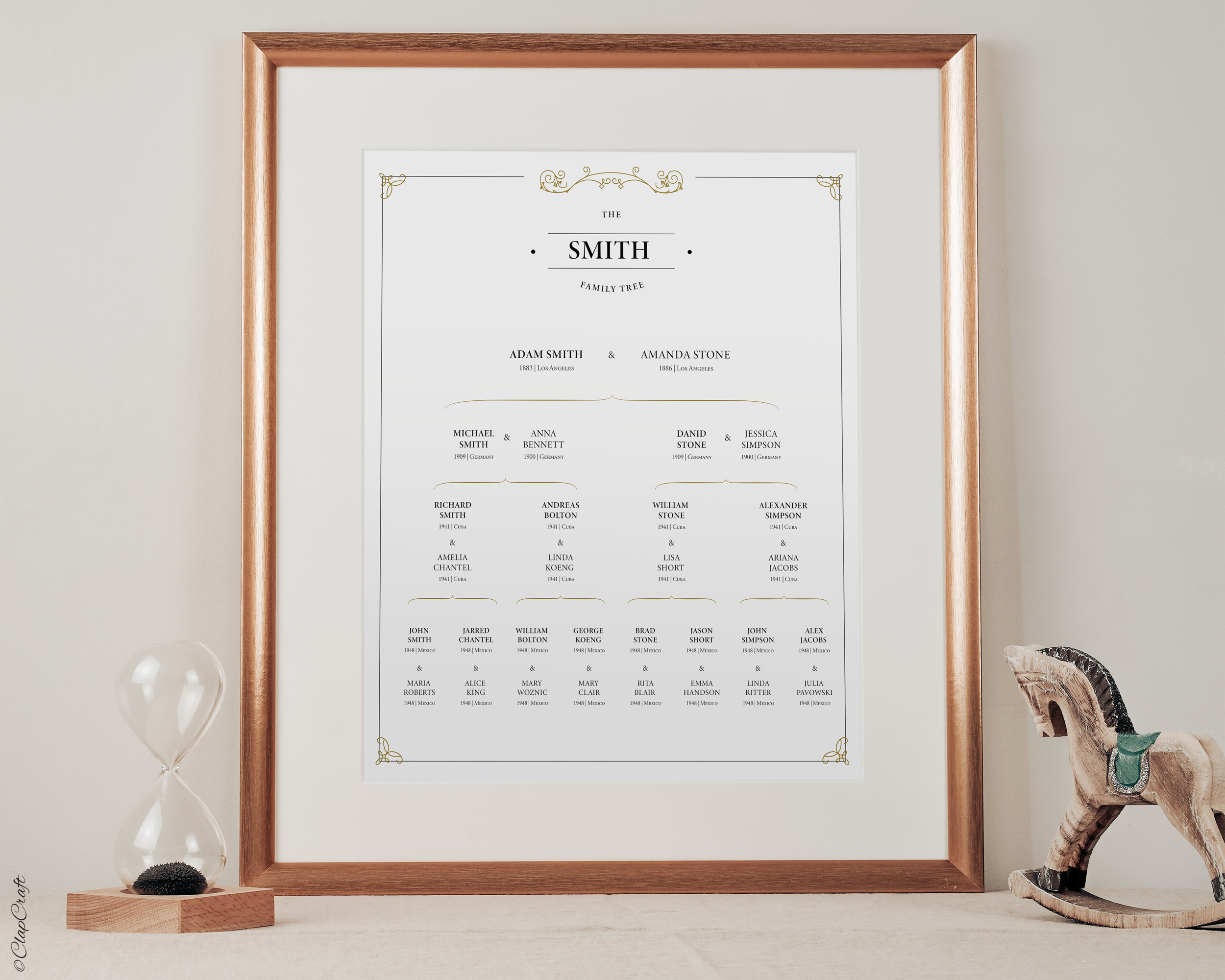
Genealogy chart by ClapCraft
This article will help you start an exciting journey in genealogy and successfully build your genealogy chart. Here are the five steps to begin researching your family history.
1. Write down what you know
The first step is to write down the information you already know. You can use this free family tree template available for download below to start filling out the data you have. You can even turn this into a quest and bring this family tree chart to your relatives and see if they can help you uncover new information. Here are some more free Family Tree templates for your personal projects.
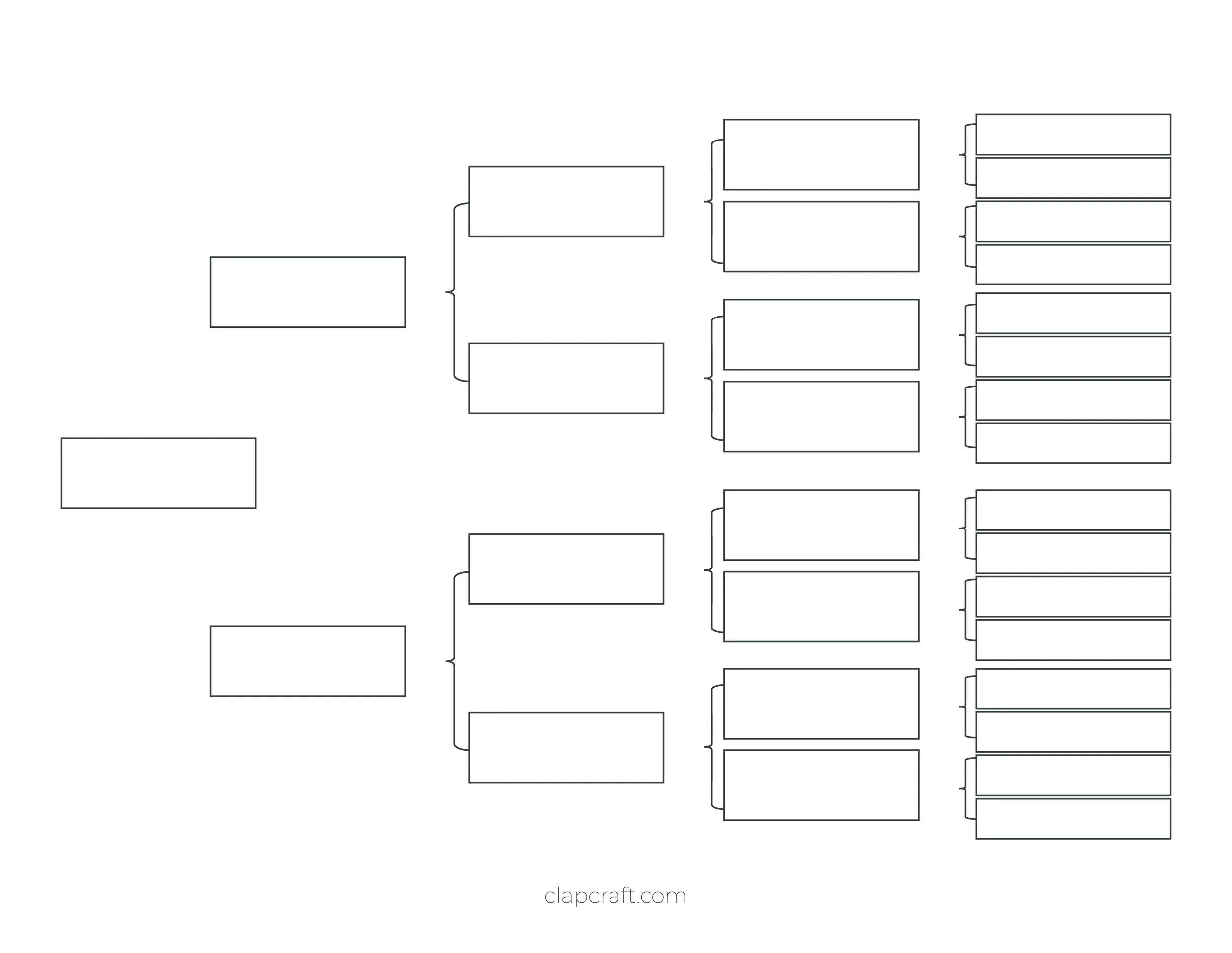
Printable genealogy chart for 5 generations
2. Organize your photo archives and explore them
Many of us have photos or even tons of photos that can quickly turn into a disorganized mess. To work with this valuable material, you first need to organize your photo archives, identify people, their relationships, and label the most important photographs. Your photos are clues to your past and offer an invaluable resource in uncovering your family history.
3. Go through all the documents
Take your time to examine the documents in your possession, things like letters, diaries, marriage certificates, and so on. Make sure to write down the concrete facts, key dates, places, and names. You can set a dedicated folder to store copies of the documents that answer your genealogy questions.
4. Ask questions
Genealogy is all about talking to people before they are no longer able to speak to us. A simple question, “Tell me more about your parents?” is not enough to get extensive information. People tend to remember stories, so the best type of questions are those that start with Who? What? When? Where? Why? and How?
5. Take a DNA test
Go ahead and take a DNA test. You can even invite your family members to take it with you. This test is a great resource, especially for those who are newbies in genealogy research. You can also use the DNA test results to build your genetic genealogy when you get to a more advanced level.
To summarize, the best principle to approach your genealogy research is to start with yourself. Start by exploring the documents of your birth, your marriage (if you have married). Get these documents together and familiarize yourself with these records. As you begin exploring more about yourself, you will look for more available and applicable information (like military records, school records, and so on). By finding and organizing these records, you will be practicing and preparing yourself to begin researching the next generation. The next step will be to gather all available documents about your parents. Now, it is time to turn to their birth, marriage, death (if they’ve passed away) certificates, and so on. You can also find census records about them, military records, and anything available to you. These steps are essential principles in genealogy research. You choose a person and look for all the documents to establish who they are, and then you move from one generation to another.
Check out our Genealogy Gifts!